Forty Puffers and a Dream: Inside the Coat Check We Never Planned to Run
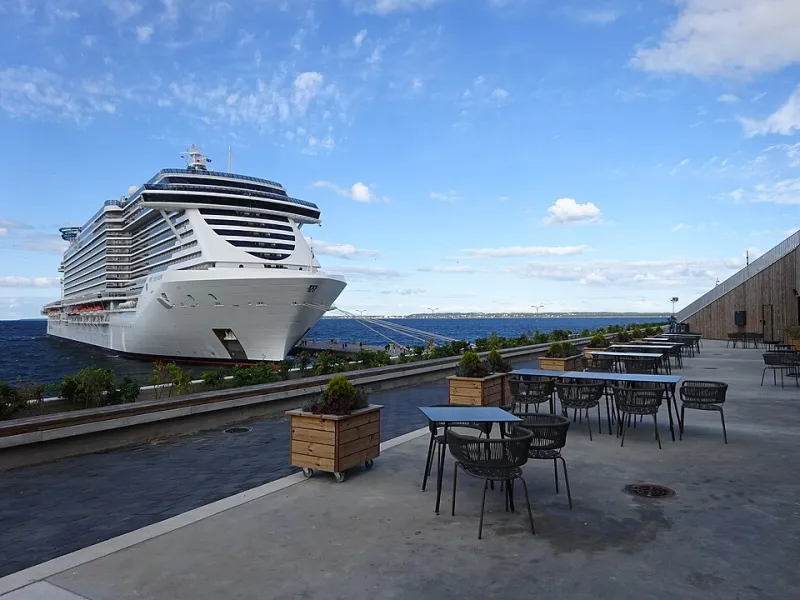
Photo: Dietmar Rabich, CC BY-SA 4.0, via Wikimedia Commons
There's a moment every December when the host stand stops being a host stand and becomes air traffic control. The reservation book says forty covers. The thermometer says thirty-one degrees. And the entryway says something like a lost-and-found at a ski lodge, except everything still has an owner — an owner who is currently deciding between the lamb shank and the braised short rib, three tables deep, entirely unaware that their coat has just become somebody's problem.
That somebody is usually Dana, our evening host, or Marcus, who joined the team part-time and now jokes that his actual job title is "garment dispatcher." Together, they run the coat check system that nobody planned, nobody marketed, and nobody — guests included — can imagine the winter terrace without.
It Started With a Garment Rack and a Panic
The first cold season we kept the terrace open, we made a rookie assumption: people eating outside in January would just wear their coats to the table. Some do. Plenty of guests love the full experience — hat on, fingers wrapped around a mug of the spiced cider, steam rising off everything.
But here's what we learned within two weekends. A puffer jacket is a poor dining companion. It takes up a chair and a half. It turns a two-top into a seating puzzle. And the moment a guest takes it off, they look around the table and realize there is nowhere graceful to put it. Over the chair back, it slides. On the seat, it's gone. On the floor, it's a wet sponge by dessert.
So guests started handing coats to whoever looked official. That was Dana. By week three, she'd commandeered a rolling garment rack from the back office, labeled a box of index cards, and invented a system on the fly.
The Card System, Explained Badly on Purpose
The genius of what Dana built is that it's almost embarrassingly simple. Every coat gets a numbered card — actual cardstock, actual Sharpie — clipped to the hanger. The matching stub goes to the guest, usually tucked next to their bread plate or handed over with a "hang onto this, it's your coat's soul."
But the cards only solve half the problem. The other half is the accessories, and this is where winter dining gets genuinely weird. People do not lose coats. People lose one glove. They lose the scarf they swear they weren't wearing. They leave a beanie balanced on the arm of a chair like it's part of the decor. Marcus keeps a small bin behind the host stand he calls "the orphans" — single mittens, lone earbuds cases, a truly impressive number of sunglasses in December.
The rule now: if you check a coat, we ask about the extras. Hat? Gloves? Scarf? They go in a labeled canvas tote that hangs with the jacket. One number, one bag, one guest. It sounds like overkill until you watch someone at 9:40 PM realize their scarf is missing and hear Dana say, without looking up, "Check your tote — it's with your jacket," and watch the entire crisis evaporate.
Heated Storage? Sort Of. It's More Like Coat Climate Control
Here's a detail most guests never think about: a coat that sits in a cold back room for two hours comes back to you cold. Cold enough to be unpleasant. Cold enough that the last five minutes of a lovely evening end with a shiver.
So we got clever, in the way restaurants get clever — which is to say cheaply and out of necessity. The coat rack lives in the heated vestibule between the indoor dining room and the terrace, the one space in the building that's consistently toasty because it's the buffer zone between inside and out. Jackets hanging there stay warm. Down doesn't like being crammed, so the rack is spaced generously. Wool items get their own section because wool holds onto kitchen smells the way a grudge holds onto a slight.
Dana's addition, which I genuinely think deserves a small award: the last-half-hour rotation. Coats for guests leaving soon get moved to the front of the rack, closest to the door, so nobody stands in the vestibule at the end of the night doing an archaeology dig through forty hangers.
Why It Matters More Than It Sounds
You could argue — reasonably — that a coat check is not a menu item, not a view, not a reason to book a table. And you'd be right. But here's the thing we've noticed in the guest feedback, again and again: the coat check shows up in reviews almost as often as the food does. Not by name, usually. It appears as a feeling. "They thought of everything." "It felt effortless, even in the snow."
That's because the coat check solves the specific anxiety of cold-weather terrace dining: the fear that being comfortable outside means being committed to discomfort. Once your layers are handled — warm, tracked, waiting — the terrace stops being a dare and becomes what we always meant it to be. Just a table. With a sky. In January.
Forty covers a night, forty puffers, one rolling rack, and a stack of index cards. It's not glamorous. It's the most Ameku Terrace thing we do.